Glass and Window Collisions
The primary reasons for collisions with glass/reflective windows in urban settings are mostly glass and reflective windows. Birds have a tendency not to be able to discern the reflected skies or vegetation from actual open space, steering in the high-speed strikes of buildings. Birds on migration are particularly susceptible to such hazards since many of them feed at night or during overcast conditions, thus creating illusions that further enhance the threat of collision.
Upon collision, birds that encounter glass may die instantly, either because of immediate demise or injuries severe enough to hamper their subsequent foraging/flight, thereby leading them towards their prey. Even medium to small constructions with large amounts of glass surfaces hold very high risks when built alongside the birds' migratory routes or anywhere close to some green patches.
Reflective and Transparent Surfaces
Windows that mirror trees, shrubs, or the sky create the appearance of safe flight paths, leading birds to strike them. Transparent glass that allows birds to see indoor plants or open spaces may also cause collisions, as birds attempt to fly through the perceived passage.
High-Rise Buildings
Tall buildings amplify the risk, particularly for nocturnal migratory birds. Structures in major flyways can result in large-scale fatalities during peak migration periods. The height and orientation of buildings relative to flight paths increase collision frequency, highlighting the need for bird-friendly building designs.
Artificial Light at Night
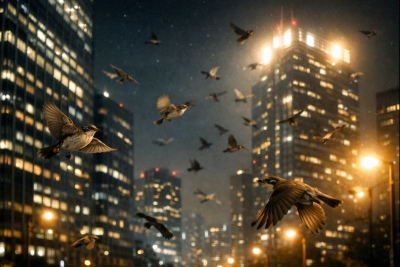
Light pollution is another major driver of fatal bird collisions. Urban lighting can disorient birds during nocturnal migration, causing them to deviate from traditional routes and circle illuminated areas until exhaustion. Bright lights also attract birds to densely built environments where the risk of collision is high.
Research shows that reducing unnecessary night lighting can significantly decrease collision rates. Turning off or dimming non-essential lights during peak migration seasons is an effective measure that cities can implement quickly.
Disorientation During Migration
Birds use natural light cues like the moon and stars to navigate during migration. Artificial lighting interferes with these cues, leading to erratic flight patterns and increasing the likelihood of striking buildings, towers, or other structures.
Attraction to Light Sources
Certain species, especially songbirds, are drawn to brightly lit areas, mistaking artificial lights for natural signals. This attraction concentrates birds in high-risk zones where collisions with glass or other obstacles are more likely.
Towers, Communication Structures, and Wind Turbines
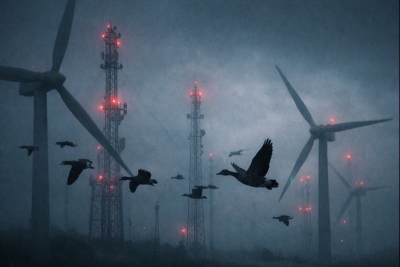
Urban infrastructure such as communication towers, cell antennas, and wind turbines also contributes to bird mortality. These structures often extend into the airspace used by migrating birds and can be difficult to see, particularly in low-light or foggy conditions. Towers with guy wires are especially hazardous because birds may not detect the thin cables until it is too late.
Wind energy infrastructure, while essential for renewable energy, can also be a source of bird collisions if not carefully sited. Proper planning and monitoring are critical to minimize these risks.
Collision-Prone Structures
Towers with lights, antennas, or cables increase collision risk, especially during fog, rain, or nighttime migration. Birds may strike these structures directly or become disoriented and collide with nearby buildings.
Wind Turbines and Energy Installations
Wind turbines can cause fatal strikes for birds flying at rotor height. Strategic placement away from migratory corridors and sensitive habitats is crucial to reduce impacts. Technology like radar-based detection systems can help temporarily shut down turbines during peak migration periods.
Mitigation and Urban Planning
Understanding the drivers of bird collisions is essential for effective mitigation. Bird-friendly building designs, including patterned or frosted glass, can reduce window strikes. Managing artificial light, especially during migration seasons, is another critical strategy.
Urban planners can also consider the location of new buildings and towers relative to known migratory routes, green spaces, and stopover sites. Engaging the public through awareness campaigns and citizen science projects can help monitor collisions and guide conservation actions.
- Use patterned, opaque, or angled glass to prevent reflections.
- Reduce or redirect artificial lighting at night, particularly during migration seasons.
- Implement tower marking and monitor wind turbines to prevent strikes.
Protecting Birds in Urban Landscapes
A growing problem of bird mortality has been observed in urban environments, mainly due to glazing, artificial lighting, and human-made structures. If the driving factors are identified and dealt with, cities, zoological conservationists, and related groups might collectively reduce avian fatality and further protect biodiversity.
With the kind support: